

Published Sep 02, 2026 | 9:02 AM ⚊ Updated Sep 02, 2026 | 10:12 AM

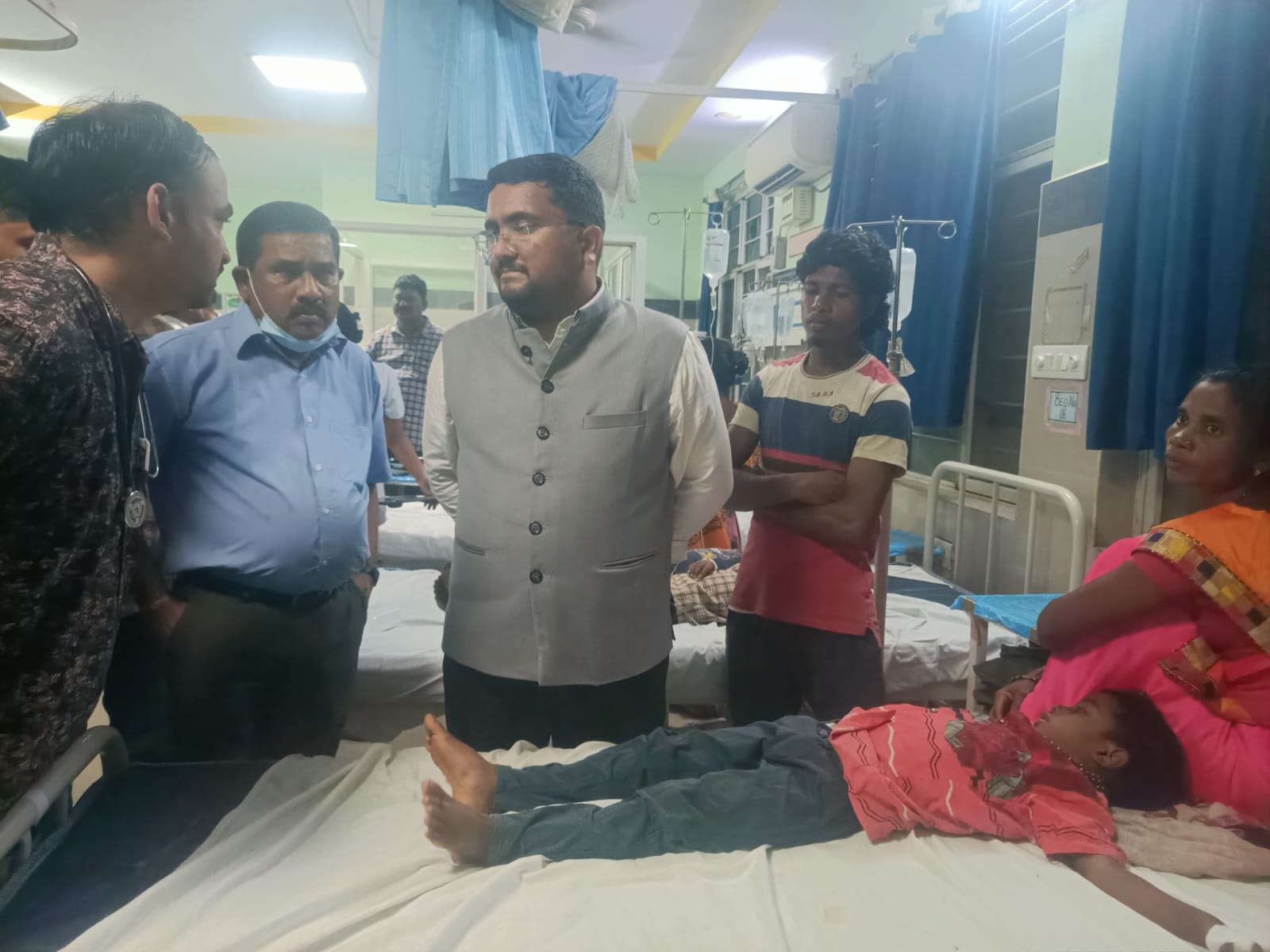
Chintur ITDA Project Officer Shubham Nokhwal and other officials visited the Bhadrachalam hospital to assess the condition of the affected people.

Synopsis: A seven-year-old tribal girl died, and more than 70 people, including students and villagers, fell ill after reportedly experiencing adverse reactions to chloroquine tablets administered during a malaria-prevention drive in Andhra Pradesh’s Gollaguppa village. Chief Minister Chandrababu Naidu ordered a comprehensive investigation and directed officials to ensure treatment for those affected.
A seven-year-old girl died, and around 70 people, including children, have fallen ill after consuming malaria-prevention tablets administered by the local health centre in Andhra Pradesh’s Gollaguppa.
Gollaguppa is a tribal village in the Polavaram Agency area. The medicine was distributed among the population, including tribal students and villagers, on September 1 after a malaria screening was conducted by staff at the local health centre. Among those who have fallen ill after taking the tablets are 14 Anganwadi children, 40 tribal students and 18 villagers.
Those critically ill after taking the tablets were shifted to the Bhadrachalam Area Hospital in Telangana for better treatment.
Polavaram District Collector K. Dinesh Kumar briefed State Minister for Health and Medical Education Sri Satya Kumar over the phone on Wednesday, September 2, on the latest situation in Gullagappa and said the condition of the villagers undergoing treatment was stable.
Kumar informed the minister that patients confirmed to have malaria would remain under medical observation for another 24 hours, while most of the other villagers are likely to be discharged later in the afternoon.
The Collector also stated that measures are being taken to create health profiles for all residents of Gullagappa and the situation in the village is being continuously monitored.
As part of the malaria-prevention measures, medical staff from the Gouridevipeta Primary Health Centre (PHC) conducted a medical camp in Gollaguppa on September 1 and carried out blood tests among villagers.
Some residents tested positive for malaria. Following this, chloroquine tablets were administered to 27 students of the GPS school, 14 children from the Anganwadi centre, and other villagers.
Among those who took the malaria tablets was seven-year-old Madivi Jamuna, a Class 2 student at the GPS school. She developed severe vomiting and a burning sensation in her stomach after consuming the medicine. She was rushed to the nearby Lakshmipuram PHC, from where doctors referred her by ambulance to the Area Hospital in Bhadrachalam, Telangana. However, she was declared brought dead upon arrival at the hospital.
By evening that day, several more children in the village began experiencing symptoms including stomach pain and dizziness. Some were transported on two-wheelers through forest routes to the national highway, from where they were shifted to the Bhadrachalam Area Hospital in two ambulances.
Others were taken to the nearby Lakshmipuram PHC for treatment. As the condition of six students reportedly became critical, they too were shifted to the Bhadrachalam Hospital.
A total of 34 villagers and children from Gollaguppa are being treated at the Bhadrachalam hospital. At Lakshmipuram PHC, 24 people were given preliminary treatment and subsequently shifted to Bhadrachalam for advanced medical care.
Villagers and tribal organisations expressed anger, alleging that the girl’s death was caused by negligence on the part of medical staff. They alleged that the government was failing to take adequate measures despite a series of deaths among tribal children in the Agency area.
Locals also informed that an 11-year-old girl from the same village had died of stomach pain on August 28.
Also Read: Three separate suicides of entire families, allegedly over financial issues, raises concern in AP
According to the District Collector, doctors who treated 7-year-old Jamuna suspect that her death might have been caused by an underlying cardiac issue. What reportedly led to such suspicion is a finding that two other infants in Jamuna’s family had previously died from unknown causes before reaching the age of one. This led doctors to suspect a possible genetic heart-related condition within the family.
Medical experts are of the opinion that individuals with such heart conditions face a very rare risk of developing cardiac arrhythmia when treated with drugs like chloroquine.
The Collector also noted that patients experiencing vomiting after taking the chloroquine tablets was a side effect doctors described as common for this medication.
Chief Minister N. Chandrababu Naidu spoke with senior officials of the Health and Medical Department and the district Collector on September 1 after receiving information about the incident.
Officials told the CM that a medical camp was set up in the village immediately after the incident came to light, and that medical examinations were conducted.
Meanwhile, Chintur Integrated Tribal Development Agency (ITDA) Project Officer Shubham Nokhwal and other officials visited the Bhadrachalam hospital in Telangana to assess the condition of the affected people. They informed the CM that the condition of the patients was currently stable and clarified that reports claiming two deaths in the incident are false.
Collector Dinesh said a nine-member medical team had already been dispatched from Kakinada Government General Hospital (GGH), while three more special teams –from Vijayawada, Rajamahendravaram and Kakinada– were also sent to the area.
CM Chandrababu Naidu directed the officials to ensure the affected people receive the best possible medical treatment and ordered a comprehensive investigation into the incident.
(Edited by Fayisa CA)
Also Read: Andhra woman dies after medical staff allegedly perform abortion based on doctor’s video call



